
If you've ever opened an SEO guide, spent two hours reading it, and come out more confused than when you started — you're not broken. SEO is genuinely hard, and the industry doesn't always do a great job of admitting that.
I've spent years in the SEO trenches, and the question I hear most from small business owners isn't "how do I do SEO?" It's: "Why is this so hard to figure out?"
The short answer: SEO isn't one skill. It's a moving target that sits at the intersection of technology, content, psychology, and competition — and the landscape just got more complicated than ever with the rise of AI-generated search results. Let's break down the real reasons, one by one, and talk about what you can actually do about them.
There Is No Official Rulebook
Unlike accounting or law, SEO has no licensing body, no certified standards, and no single authoritative source of truth. Google does not publish a full list of ranking factors. They offer guidelines, but the actual algorithm is a closely guarded black box that even Google's own engineers can't fully explain.
This means every SEO recommendation you read — from this article included — is based on a combination of pattern recognition, testing, and professional experience. That's a strange foundation for something that can make or break a business's online visibility.
Focus on sources that cite actual testing data, not just opinion. Google's Search Central documentation is the closest thing to an official rulebook and should be your first stop for any foundational question.
Google Changes the Rules Mid-Game
Even if you master the current best practices, they may not hold. Google runs thousands of algorithm experiments each year and deploys multiple core updates that can dramatically shift rankings overnight.
The March 2024 Core Update and the subsequent "Helpful Content" rollup, for example, wiped out a significant percentage of websites that had been ranking for years — many of them following the playbook that had always worked before. Sites that ranked in 2022 on pure keyword optimization are now penalized for the exact same thing.
Keeping up isn't optional — it's the baseline cost of doing SEO. For beginners, this whiplash pace makes it feel like learning a language that gets new grammar rules every few months.
Treating SEO as a one-time setup. The sites that hold their rankings long-term treat it as an ongoing practice, not a project.
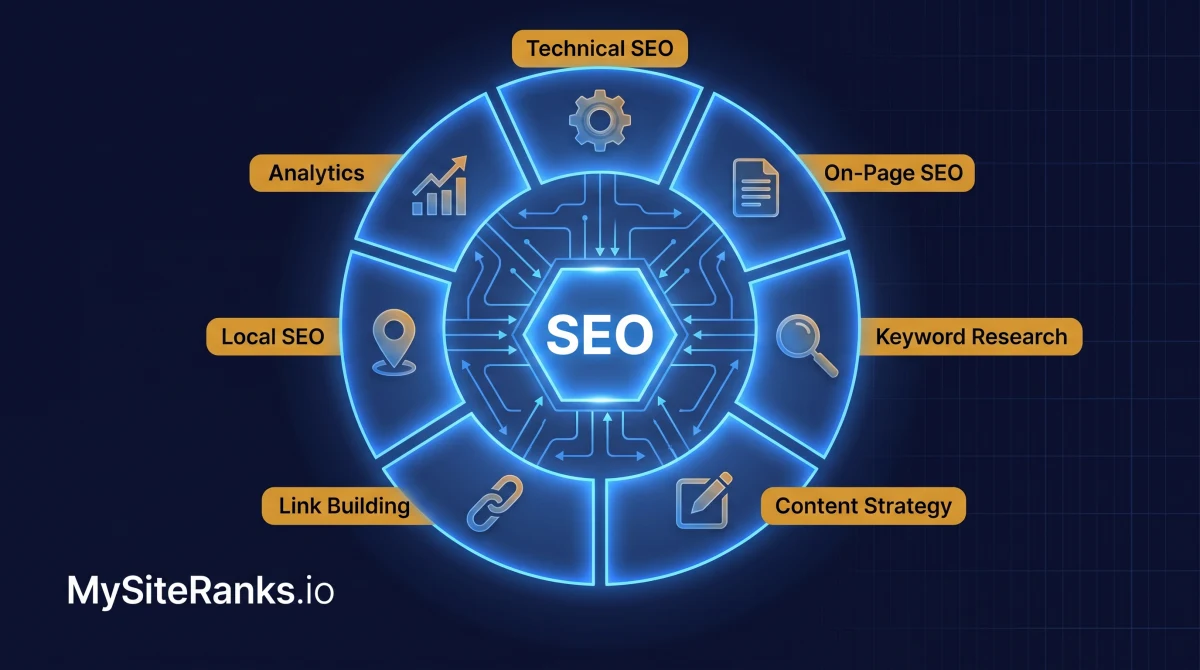
SEO Is Actually 7+ Different Skills in One
Here's something most intro guides won't tell you: "SEO" is really a bundle of disciplines that each require serious depth. To do it well, you need to understand all of the following — and how they work together.
Mastery requires all of them working together. Most beginners stumble because they focus hard on one area and neglect the others — and Google notices the imbalance.
AI Overviews Are Rewriting the Game (Again)
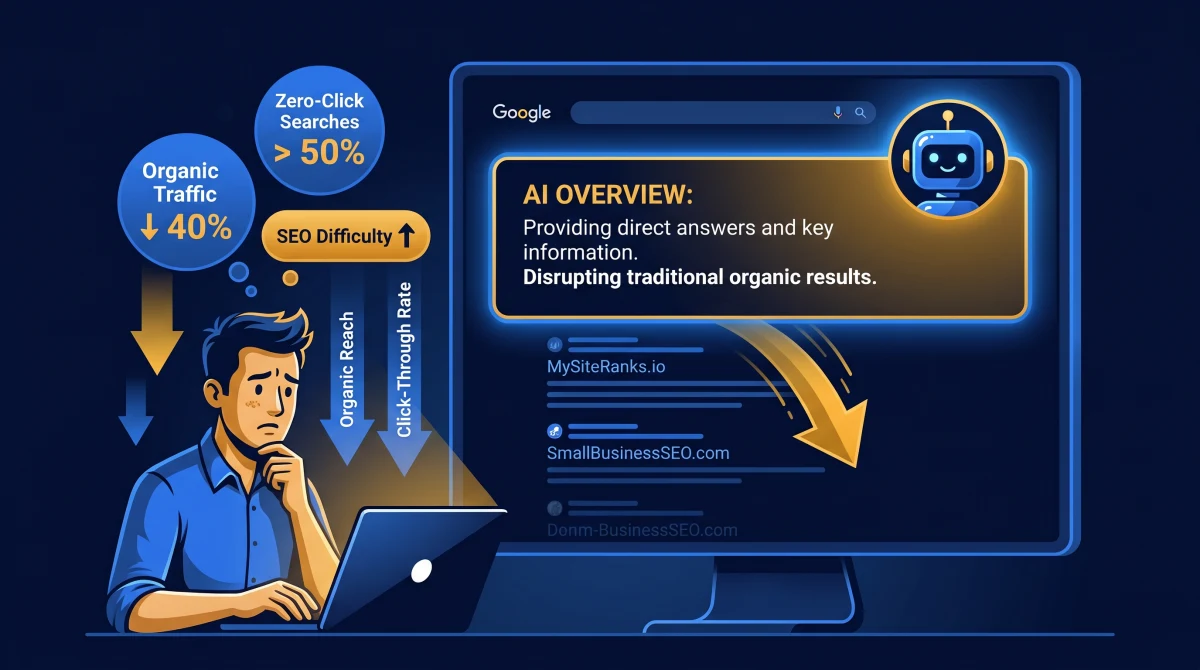
This is the one that's blindsiding even experienced SEOs right now. Google's AI Overviews — which generate a direct answer at the top of the search results — are fundamentally changing the relationship between rankings and traffic.
You can rank #1 for a keyword and still get almost no clicks, because Google summarizes the answer before anyone scrolls down to your result. Studies show zero-click searches are growing, and for informational queries in particular, the dynamic is dramatic.
To stay competitive in 2026 and beyond, SEO increasingly requires:
- Optimizing for citation in AI answers, not just traditional blue link rankings
- Building real brand authority and E-E-A-T signals that AI models trust
- Focusing harder on bottom-of-funnel content where users have buying intent
- Structuring content in ways that LLMs and AI Overviews can extract and cite
This is a layer of complexity that didn't exist three years ago. Learning SEO now means learning the old game and the new one at the same time.
The Competition Is Already Entrenched
Most beginners underestimate just how competitive the search landscape is. For virtually every valuable keyword in every industry, there are already dozens — sometimes hundreds — of well-funded, well-optimized websites that have been building authority for years.
New sites face a compounding disadvantage: they have no domain authority, no backlinks, no content history, and no established trust signals. Competing against a 10-year-old site with 5,000 pages of content and 10,000 backlinks is a fundamentally different challenge than starting fresh.
It's not impossible — niche targeting, long-tail keyword strategies, and local SEO can level the playing field significantly — but it's never as simple as "write good content and wait."
The Tool Landscape Is Overwhelming
A quick search for "SEO tools" surfaces hundreds of platforms, each claiming to be essential. Ahrefs, Semrush, Moz, Screaming Frog, Surfer SEO, Clearscope, SE Ranking, Mangools, Google Search Console, Google Analytics 4, Bing Webmaster Tools — and that's before you get to AI writing tools.
Each tool has its own learning curve, its own data model, and its own metrics that don't always align with what Google actually uses. Beginners can easily spend more time learning tools than actually doing SEO — and rack up hundreds of dollars per month in subscriptions chasing "the right stack."
Start with just two tools: Google Search Console (free, and it's Google's own data) and one third-party keyword tool like Ahrefs or Semrush. Master those before adding anything else.
Results Are Delayed — Sometimes By Months
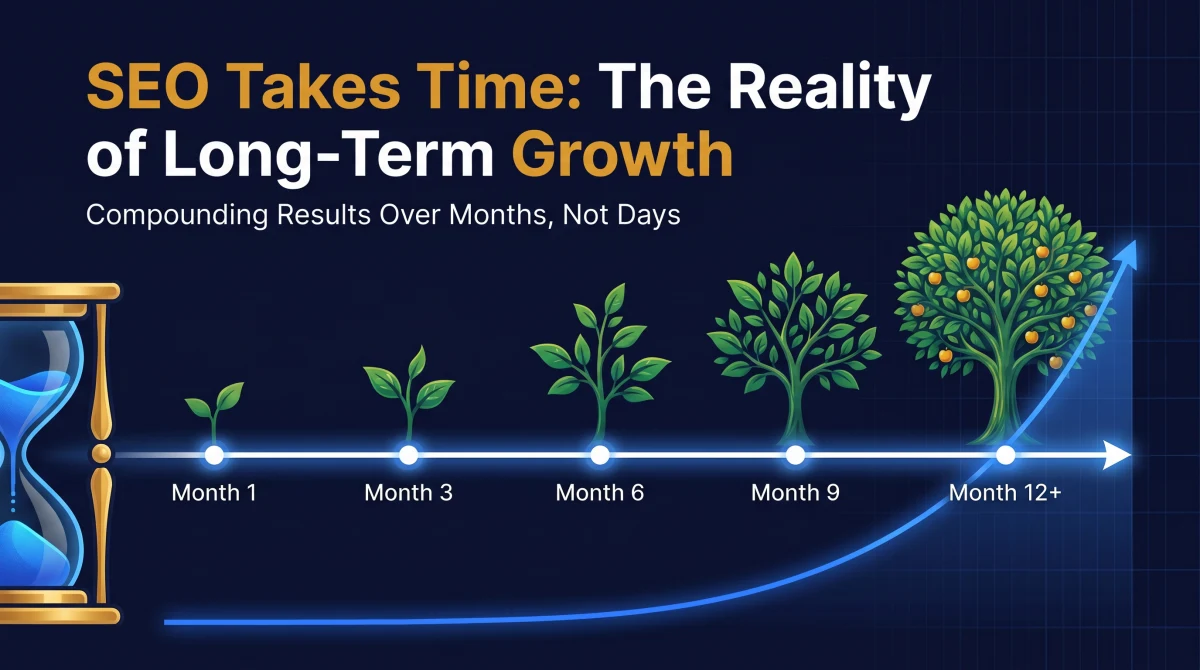
Unlike paid ads where you can flip a switch and see traffic tomorrow, SEO takes time. In competitive markets, it can take 3 to 6 months to see meaningful movement on a new piece of content — and 12+ months to build the kind of domain authority that drives consistent rankings.
This delayed feedback loop is brutal for learning. You implement changes, wait, and often can't tell whether the results (positive or negative) came from what you did, from something a competitor did, or from an algorithm update that happened in between.
Without the patience to endure this uncertainty, most people quit too early — right before the compound effect of consistent SEO work starts to pay off.
Misinformation Is Everywhere
The SEO industry has a misinformation problem. Because there's no official certification and anyone can publish a "guide," the web is full of tactics that worked in 2012, tactics that never worked but sound plausible, and tactics that will actively get your site penalized.
Buying cheap backlinks. Keyword stuffing. Exact-match anchor text manipulation. Thin "AI-generated at scale" content. Private blog networks. These practices are still being recommended on YouTube videos and forums today — and following them is one of the fastest ways to sink a site.
Sorting myth from fact requires a level of expertise that beginners don't yet have, which is precisely the catch-22 that makes SEO so frustrating to learn independently.
Taking SEO advice from anyone who isn't actively managing real client sites and tracking real results. Always ask: "What's the evidence for this?"
It's As Much Psychology As It Is Technology
SEO isn't just about ranking — it's about convincing humans to click, read, and convert. That means understanding search intent (what is someone actually trying to accomplish?), user experience (why are they leaving so quickly?), and persuasion (why aren't they converting?).
These are soft skills that don't show up on any technical checklist. And they require genuine empathy for the reader — something that's hard to teach and easy to skip when you're focused on keyword density and meta tags.
The best SEO practitioners are equal parts data analyst and storyteller. Most beginners enter from only one of those two angles.
E-E-A-T Has Raised the Bar
Google's E-E-A-T framework — Experience, Expertise, Authoritativeness, and Trustworthiness — is the lens through which Google evaluates whether your content deserves to rank, especially in competitive or "Your Money or Your Life" (YMYL) categories.
What this means practically: Google increasingly rewards content written by real, credentialed people with demonstrated experience, published on trustworthy domains with real reputations. Anonymous content, generic "top 10" listicles, and AI-generated fluff without human expertise layered in are all being downgraded.
Building E-E-A-T takes time, consistency, and a deliberate publishing strategy. For a new site or a solo business owner doing SEO for the first time, this is a significant obstacle — because you're not just competing on content quality, you're competing on perceived authority.
Is SEO Still Worth Learning in 2026?
Yes. Unambiguously.
Despite everything above, SEO remains one of the highest-ROI channels available to small and mid-sized businesses. Organic search traffic doesn't turn off when you stop paying for it. A well-optimized site generating consistent leads is a business asset, not just a marketing tactic.
The question isn't whether SEO is worth it — it's whether going it alone is the right approach for your situation. For most business owners, the time cost of learning SEO from scratch — while simultaneously running a business — is simply too high. The opportunity cost alone often exceeds what professional help would cost.
That's not a pitch. It's just an honest answer based on watching hundreds of businesses struggle with this exact calculation.
Frequently Asked Questions
Most people can grasp the fundamentals in 3 to 6 months of dedicated study and practice. Becoming proficient — meaning you can reliably improve rankings for competitive terms — typically takes 1 to 2 years. True mastery is an ongoing process that never stops, because the field never stops changing.
Yes, but it requires significant time investment and a willingness to test, fail, and adapt. The biggest risk is acting on bad information. Stick to credible sources, use Google's own documentation as a baseline, and focus on fundamentals before tactics.
SEO has a steep initial learning curve, mostly because of the breadth of topics involved and the lack of a single authoritative source. Once you establish a framework, it becomes more manageable — but the field never becomes "easy" because it never stops evolving.
Most practitioners agree: link building and patience. Earning high-quality backlinks requires building genuine relationships and creating content people want to reference. And tolerating months of work before seeing clear results is psychologically demanding.
Technical SEO is the steepest part of the learning curve for non-developers. Concepts like crawl budget, Core Web Vitals, canonical tags, structured data, and indexing require at least a basic understanding of how websites are built. That said, many technical SEO improvements can be made without writing code, especially on modern CMS platforms.
Skip the Trial-and-Error.
Start Ranking Faster.
At MySiteRanks.io, Jeff personally audits your site and delivers a clear, prioritized action plan — no cost, no obligation, no contracts.
Book Your Free SEO Audit →